
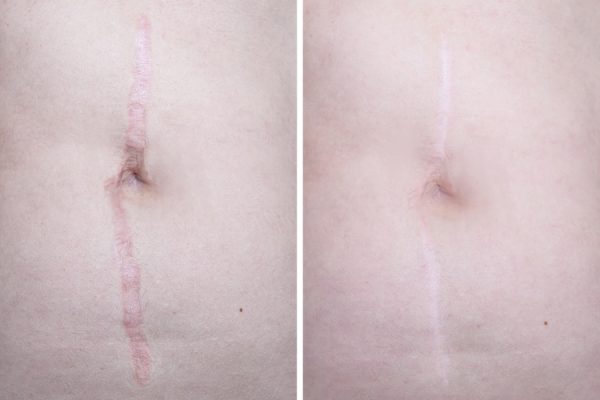
Scar Revision and Keloid Treatment: Modern Options That Actually Work
Quick Takeaways
- • Scars form as the body repairs skin, but misaligned collagen can cause visible or raised marks.
- • Common scar types include atrophic, hypertrophic, and keloid scars.
- • Modern treatments range from laser resurfacing and microneedling to steroid or 5-FU injections.
- • Keloids often need combination therapy for best results.
- • While no scar can be fully erased, texture and color can be dramatically improved.
- • Consistent aftercare—sun protection, silicone gel, and follow-ups—enhances healing results.
For many people, scars are more than simply a cosmetic concern. In addition to discoloration or texture changes, scarring can be painful, negatively affect our self-esteem, or cause irritation.
Scars are an abnormal healing response of the skin to injury. There are many types of scars, including:
- Atrophic scars: Also known as depressed scars, atrophic scars are sunken and often caused by acne or chickenpox. They may become more pronounced with the loss of collagen and elasticity that comes with aging.
- Hypertrophic scars: These scars are raised and thick, caused by a wound that heals abnormally. They may get smaller over time.
- Flat scars: This type of scar may start out raised, but gradually flattens. Often pink or red in color, they can become slightly darker or lighter than the skin surrounding them.
- Stretch marks: This type of scar occurs after a period of skin expanding or shrinking in a short period of time, such as with pregnancy or large weight loss. This process damages the skin’s connective tissue.
- Keloids: These slow-growing scars are raised and larger than the wound that caused it. They may develop over months or even years.
- Contracture scars: This type of scar often happens after a burn and causes the skin to contract.
What causes scars to form abnormally?
Scar formation takes place across four stages: hemostasis, when blood clots immediately after an injury to form a scab; inflammation, when the site becomes red and swollen as white blood cells fight infection; proliferation or debridement, when collagen, blood vessels, and new tissue mend the damage and the scab loosens or falls off; and maturation or remodeling, when collagen fibers reorganize and a new layer of skin forms – this stage may take months or years. Because the collagen fibers don’t match the surrounding skin, a scar forms.
However, there are a few factors that can cause a scar to form abnormally. For example, keloid scars form when there is an excess of collagen that causes the scars to get raised and larger. They can also occur more often in people with darker skin tones or a family history of this type of scar.
Lifestyle factors like smoking and not using sunscreen can also cause scars to form abnormally and hyperpigment. Because collagen decreases as we get older, age can also make an impact on scar healing.
Additionally, improper wound care can cause abnormal scar formation. Be sure to change bandages daily to keep the wound clean, use petroleum jelly or a similar ointment to keep the area moist, and follow your doctor’s instructions for wound care if necessary.
No matter what type of scar is present or where it’s located, there are many scar revision options that can significantly reduce its appearance.
Scar revision techniques explained
Laser resurfacing
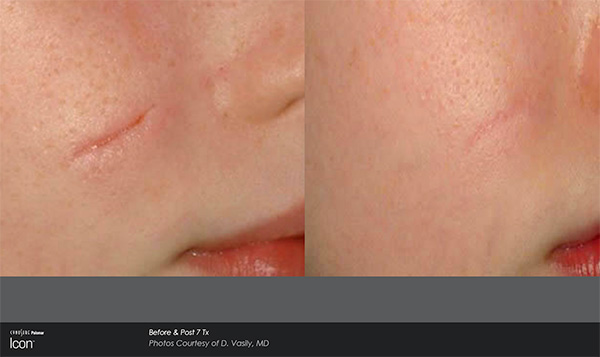
Laser resurfacing is helpful for reducing acne scars, burn scars, and other types of scars ranging from mild to significant. Fractional, or fractionated, carbon dioxide (CO2) laser resurfacing delivers partial beams of light energy, targeting a fraction of the skin in a pixelated pattern. Small areas of the skin are treated in a fractional CO2 laser treatment. By comparison, non-fractional CO2 laser – also known as ablative CO2 laser – removes more of the epidermis than in fractional laser treatments. The fractional CO2 laser gives the most impressive result on scars, particularly large deep scars such as burns.
IPL, pigment and vascular lasers can also be used to treat the redness and/ or pigment within the scars.
Surgical excision
Surgical treatments for scar revision include excisions of scar tissue and surgical subcision. Surgical ‘punch’ excisions of scar tissue are the treatment of choice for so-called ‘ice pick’ scarring. Small 2-4mm pieces of scar tissue are removed and tissue is stitched together. This is done in the office under local anaesthesia and often paired with laser resurfacing done at suture removal.
Surgical subcision can be used in larger areas and for certain types of scars where there is scar tissue underneath the skin. Under local anaesthesia, the deep scar is “broken apart” and separated from the overlying skin using a large needle. This often gives temporary bruising, but can raise larger scarred areas and make less laser treatments necessary.
Steroid injections
Steroid injections are a scar revision option that can help flatten, soften, or shrink the scar. In these scar treatments, corticosteroid reduces the formation of collagen in the injected area.
Topical silicone gel/sheets
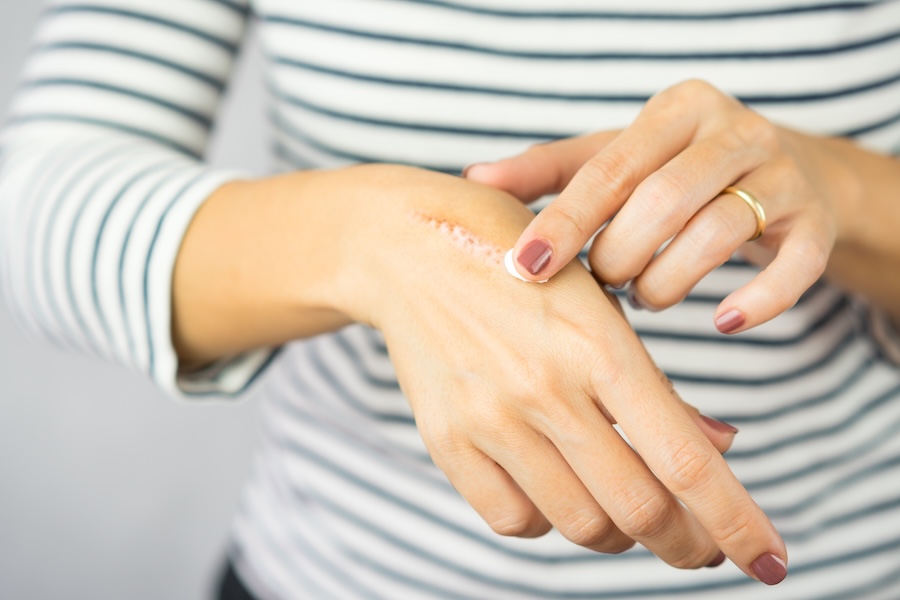
Silicone gel ointment or flexible silicone sheets are both a scar revision treatment option and a way to prevent the appearance of raised scars. They’re a consideration for those dealing with hypertrophic (raised) scars. Silagen Silcone Gel for Scars is quick-drying, non-irritating medical grade silicone + zinc oxide is used for the reduction of scarring and keloids and prevention of UV-induced hyperpigmentation.
Dermal fillers
Dermal fillers can also be used to elevate indented, soft scars. Improvement is immediate, but the trade-off is that it’s not permanent. Injections typically need to be repeated every 6-10 months.
Learn more about other scar revision treatment options including dermal fillers and lasers.
Keloid-specific treatments
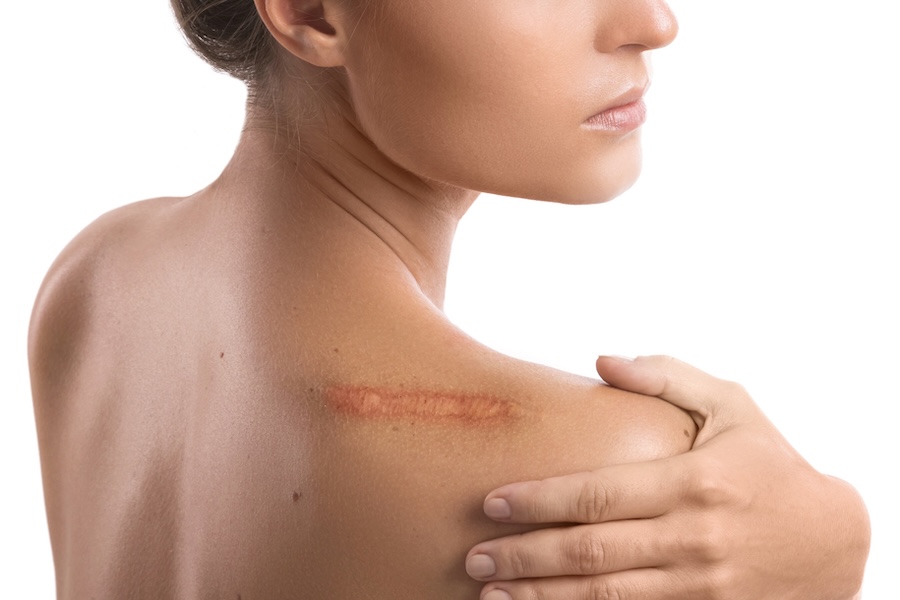
Keloids are unsightly and sometimes painful scars that can occur after a procedure or on their own. The tendency toward keloidal scarring can be inherited, and can occur anywhere on the body although are most common on chest, neck and back and shoulders.
Because keloids are raised, bumpy, and larger than the initial wound area, they’re a common scar type that people want addressed. Here are some of the treatments that can help reduce the appearance of keloid scars specifically:
Triamcinolone acetonide injections
Triamcinolone acetonide, also known as TAC, is the most common corticosteroid injection used to help shrink keloids. It can be used either on its own or in combination with other treatments. A study found that TAC “was proved to be effective in reducing keloid scar dimensions, alleviating symptoms such as itching and pain and preventing recurrence.” It can also reduce keloid recurrence after surgical excision. As with any steroid injectable, however, there are potential risks such as hypopigmentation, hyperpigmentation, skin thinning, spider veins, and delayed wound healing.
5-FU injections
One common injectable often used in combination with TAC is 5-FU, or 5-fluorouracil. It inhibits the growth of fibroblasts that contribute to scarring, thereby minimizing scar tissue. According to research, combining TAC with 5-FU may reduce undesired effects of 5-FU such as pain, erythema and superficial ulceration.
Cryotherapy
Smaller keloids may respond well to cryotherapy, in which the affected area is frozen with liquid nitrogen. This freezes the keloid from the inside, without affecting the skin beneath. Several cryotherapy treatments may be needed to reduce the hardness or size of the keloid. Possible cryotherapy side effects include pain and blistering. Those with darker skin tones may not be a good candidate for cryotherapy, as it can cause permanent hypopigmentation on the affected area.
Laser
Pulsed dye lasers and IPL have been the standard treatment for hypertrophic scars and keloids. Combination therapy is usually needed to treat hypertrophic scars and keloids since the response can be variable.
Often, a combination of two or more of the above therapies is recommended for best results overall. For example, in order to flatten the scar, intra-lesional steroid injections are frequently used in addition to topical therapies worn daily. Additionally, IPL and pigment lasers like the Cutera Pico and ExcelV vascular laser can reduce a scar’s red appearance, and improve itching and burning sensations.
Speak with your dermatologist to learn more about the best combination of treatments to address keloid and other scars. Dr Pennoyer is proud to offer a series of scar revision options to patients in Hartford county. To let us personalize a scar revision treatment plan that’s best for your unique needs, message us via Klara at (860) 787-8396.
What to expect from scar revision treatment
Each scar revision treatment is unique, and what to expect depends on factors like the type of scar, the newness of the scar, medications, and lifestyle factors that could affect healing. Your dermatologist will evaluate your scar and discuss the best options to address it.
Timeline for improvement after scar revision
Recovery times vary depending on the procedure and/or combination of treatments, and many people need several treatments. Immediately after a scar revision treatment, you may notice discomfort, localized swelling, or discoloration that should fade in 1-2 weeks. For procedures such as laser resurfacing, you may also experience sensitivity in the treated area. For best results, laser treatments are done when there is no sun exposure both before and after treatments. Overall, recovery from scar revision can take weeks or months, and it could take years to see the desired results.
Be sure to follow post-care instructions you receive from your dermatologist.
What are the limitations of scar revision?
People turn to scar revision for a variety of reasons, but no treatment can remove a scar entirely. Successful scar revision reduces its size, texture, and color to more closely match the surrounding skin.
Risks of scar revision depend on the type of treatments used, including:
- Topical scar revision: discomfort, irritation, or a rash
- Injectables and laser resurfacing for scar revision: hyperpigmentation, redness, swelling, blistering, sunlight sensitivity
- Surgical scar revision: bleeding, infection, recurrence of the scar or formation of a new scar
Preventative measures for high-risk patients
Your dermatologist will advise you on the best ways to manage risks of scar revision. If you have diabetes or are taking immunosuppressants, there may be special instructions you need to follow before a procedure to mitigate the risks of scar revision.
If you take isotretinoin or other medications for severe acne, it’s important that you consult your doctor before seeking scar revision, since you may have to delay this medication during the overall scar revision process.
Post-operative scar management plans
Following the post-procedure instructions given to you by your doctor will help you mitigate risks and promote healing. In general, ensure that the treated area is kept clean and protected to avoid infection. Avoid activities that can stretch or pull the treated area, and speak with your doctor about a timeline for reintroducing activities such as exercise. It’s also critically important to avoid sun exposure on the treated area, as it can lead to hyperpigmentation of the scar. If you have darker skin, your dermatologist may recommend products to help you counter the risk of hyperpigmentation.
Concerned about moles or about the appearance of biopsy scars? To book a consultation to discuss how we can help, message us via Klara at (860) 787-8396.
“What’s the difference between a keloid and hypertrophic scar?”
Keloids and hypertrophic scars are both a result of excess collagen at a wound site, causing a thick, rough, or raised scar. The main differences are that keloids’ connective tissue keeps growing past the site of the wound, and the collagen fibers are arranged randomly.
“Are keloids dangerous?”
No. Keloids are considered to be a benign tumor and have no ill effects on your health.
“Can laser remove a scar completely?”
While lasers can reduce the appearance of scars, it can’t remove a scar completely. Be sure to see a board-certified dermatologist for laser scar revision to ensure safe results.
To learn more about scar revision treatments available at Pennoyer MD, message us via Klara at (860) 787-8396.
Sources
https://my.clevelandclinic.org/health/diseases/11030-scars
https://my.clevelandclinic.org/health/treatments/24670-scar-revision
https://www.webmd.com/skin-problems-and-treatments/scars
https://www.dermatologists.org/scars/
https://www.aad.org/public/everyday-care/injured-skin/burns/wound-care-minimize-scars
https://medlineplus.gov/ency/article/002991.htm
https://www.mayoclinic.org/diseases-conditions/keloid-scar/diagnosis-treatment/drc-20520902
https://pmc.ncbi.nlm.nih.gov/articles/PMC6063260
https://www.aao.org/eyenet/article/reduce-scarring-with-5-fu
https://www.plasticsurgery.org/reconstructive-procedures/scar-revision/recovery
https://shi.org/post-surgical-scar-care-best-practices-for-optimal-healing/
https://www.healthline.com/health/keloid-versus-hypertrophic-scar
https://www.aad.org/public/cosmetic/scars-stretch-marks/laser-treatment-scar