

CO2 Laser Resurfacing: Is It Worth It? Benefits, Downtime, and Alternatives
Quick Takeaways
- • Concentrated light energy removes damaged skin layers and stimulates collagen
- • Faster healing and less downtime than traditional ablative options
- • Addresses deep wrinkles, scars, sun damage, and uneven tone more effectively than milder lasers or chemical peels
- • Downtime ranges from a few days to two weeks
- • Gentler alternatives offer shorter recovery but subtler results
While our skin has the ability to continually rejuvenate itself, intrinsic aging and cumulative sun exposure can cause skin to appear wrinkled and blotchy over time. If you experience the fine lines and wrinkles of aging skin, age spots, sun damage, acne scars, uneven texture, or uneven skin color, CO2 laser skin resurfacing might be helpful for you.
How does CO2 laser resurfacing work?
CO2 laser resurfacing generates energy at a at a wavelength of 10,600 nm to heat up the water inside the targeted skin cells of the epidermis. This superficial topmost layer of skin is ablated, or removed. There are different strengths of CO2 laser resurfacing treatments available, addressing different skin treatment needs.
Fractional vs non-fractional CO2 laser resurfacing
Fractional CO2 laser resurfacing delivers high-energy laser beams in a pixelated pattern, targeting a fraction of the skin at a time while leaving surrounding tissue intact. This approach promotes faster healing compared to fully ablative lasers. In contrast, traditional (non-fractionated) CO2 laser resurfacing removes the entire surface layer of skin in the treatment area, leading to longer downtime and a higher risk of complications. Many providers such as Pennoyer MD favor fractional CO2 laser resurfacing due to its reduced downtime and fewer complications compared to non-fractional laser resurfacing. While fractional CO2 laser resurfacing requires more treatments, patients often prefer not having to put their lives on hold for healing.
Ablative vs non-ablative differences
The main difference between ablative vs non-ablative CO2 lasers is the fact that ablative lasers fully remove the epidermis layer of skin, while fractional layers remove only a very small amount. However, each style of laser offers different results on top of this.
Ablative CO2 laser treatments can be intense, because of the nature of the process. They usually involve a patient undergoing general anesthesia and have a two-week downtime period. Because ablative CO2 lasers may cause pigmentation issues, they’re usually recommended for people with fair to light skin tones.
Fractional – or non-ablative – CO2 laser treatments are less intense. Because it treats a smaller area, the provider can adjust the depth of treatment as well as the area treated. There is less downtime compared to ablative CO2 laser treatments, and a lower risk of hyperpigmentation compared to ablative lasers.
Depth and strength of CO2 lasers vs other treatments
Depending on your skin concern, there are other treatment options available. For example, chemical peels use a chemical solution to remove damaged skin layers and trigger new collagen formation, microdermabrasion exfoliates the skin, and microneedling uses tiny needles to create controlled micro-injuries to the skin to aid in the production of collagen and elastin.
CO2 lasers are a popular alternative to these procedures because there’s better control over the location, depth, and intensity of the treatment. In addition, CO2 laser treatments often take a shorter amount of time to see results.
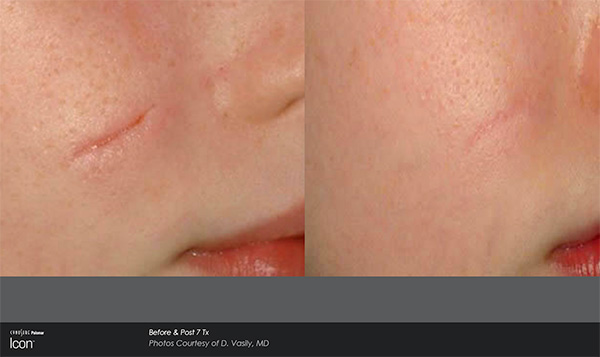
What to expect during and after CO2 laser resurfacing treatments
Whether you’re receiving fractional or ablative CO2 laser resurfacing treatments, here’s what to expect during, and after the procedure.
Your face will be cleaned. If receiving fractional CO2 laser treatment, a local anesthesia is applied to the area being treated. If receiving ablative CO2 laser treatment, general anesthesia is used.
- Protective eyewear may be used, depending on the area being treated.
- Once the anesthesia has taken effect, the provider begins to move the laser device across the area being treated.
- If you’re having fractional CO2 laser treatment, the sensation will feel like a rubber band snapping against your skin.
- After the procedure is finished, the provider will cover the area with ointment and dressings.
CO2 laser downtime and recovery
Swelling is expected immediately after treatment and generally resolves within 24–48 hours. However, some people may experience these effects for 3–5 days after treatment. Sleeping slightly elevated for a few days post-procedure can help reduce swelling.
You may also experience redness or bronzing in the treatment area for 1–3 days. This may persist in a milder form for several weeks. Until redness has completely resolved, avoid exercise, hot tubs and Jacuzzis and any activity that causes excessive perspiration.
Place a cool compress or a wrapped ice pack on the affected area every hour or two, for 15 minutes, in the first 24 to 48 hours after the procedure.
In the first week after laser resurfacing, your skin will start to peel, revealing pink skin that will turn to your normal color over two to three months. Cleanse the treatment area two to five times a day and apply ointment as instructed by your provider. Some itching or dryness of skin may occur. This will gradually clear, and using non-irritating moisturizers may provide relief.
Avoid aggressive facial treatments and topical products for six weeks.
Detailed post-treatment care instructions will be given to you by your dermatologist, and it’s imperative that during the first two weeks after treatment, when new skin will begin to form, that you avoid sun exposure. Use sunscreen with SPF 30 or higher containing UVA/UVB protection along with a sun blocker such as zinc oxide or titanium dioxide. Sun exposure in this period of time may cause permanent hypopigmentation or hyperpigmentation.
After the initial two weeks of sun avoidance, it’s important to continue to use SPF 30 or higher whenever outside for up to six months.
Benefits of CO2 vs other laser treatments
Because there are many different skin concerns and patients with varying needs, there are many laser options available. Here’s how CO2 resurfacing compares to other laser treatments.
CO2 vs Erbium
Erbium laser resurfacing addresses superficial and moderately deep facial lines, and its effects are subtle with shorter downtime compared to CO2 lasers. Because it’s a milder form of laser resurfacing, it’s ideal for a broader range of skin tones. However, the wavelength of Erbium lasers do not penetrate as deeply as CO2 lasers, which means that CO2 lasers are preferable to treat concerns like deeper wrinkles, scars, skin laxity, and sun damage.
CO2 vs IPL
IPL, or Intense Pulsed Light, refers to a non-laser, broadband, light treatment using energy in the visible and near-infrared light spectrum. It’s a popular treatment for overall photoaging, and is often called photorejuvenation or “Photofacial.” IPL breaks down sun damage discoloration and shrinks blood vessels. It doesn’t remove the epidermis like in CO2 laser treatments, and is most effective in addressing redness.
By contrast, CO2 is more comprehensive and addresses areas of deeper concern. In a recent study, fractional CO2 laser treatments were shown to be “more effective and lead to more improvement in wrinkles indentation index.”
CO2 vs Clear + Brilliant
Clear + Brilliant is a fractional laser treatment addresses skin tone, texture, and minor sun damage. Similarly to Erbium, Clear + Brilliant is a mild fractional laser treatment. Because it’s a lower-energy form of laser resurfacing, it’s ideal for a broader range of skin tones. The mildness of Clear + Brilliant treatments mean that CO2 lasers are preferable for those who have significant sun damage, skin laxity, scarring, and texture concerns.
Ablative CO2 vs Fraxel
Fractional laser treatments work below the skin’s surface from the top down, addressing imperfections like fine lines, visible photo aging, wrinkles, scarring and age spots. Fraxel light energy stimulates your skin’s natural collagen, rejuvenating skin cells below the surface to help smooth the creases and pockets that cause wrinkles and scars. Fraxel only treats targeted problem areas – so the results are focused and effective.
The non-ablative Fraxel Dual targets the epidermal layer, while ablative CO2 goes deeper into the skin. This makes ablative CO2 laser resurfacing preferable for those with significant sun damage, skin laxity, scarring, and texture concerns.
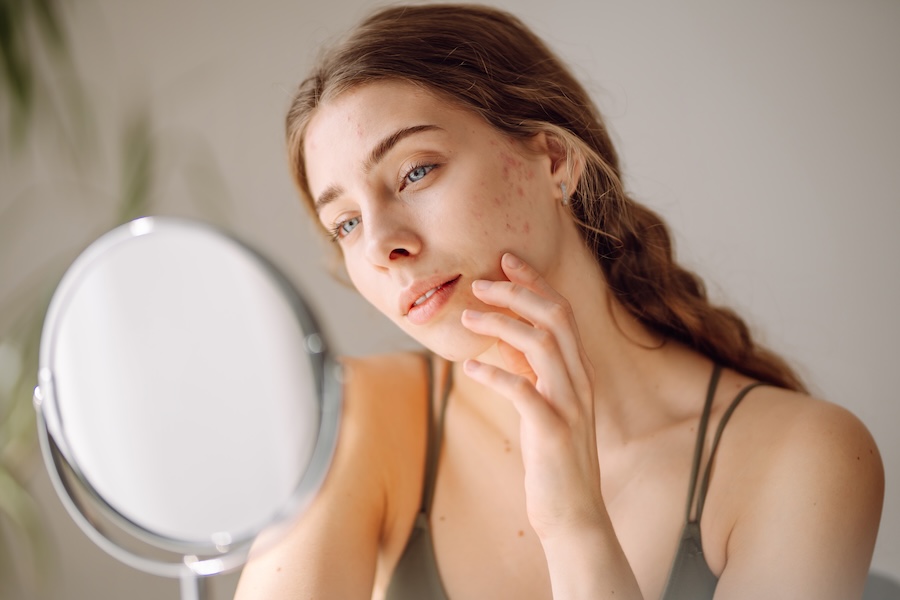
Who is (and isn’t) a good candidate for CO2 laser resurfacing?
If you experience the following, you may be a good candidate for CO2 laser skin resurfacing:
- Acne scars
- Birthmarks
- Uneven skin pigmentation
- Rough skin texture
- Post-inflammatory hyperpigmentation
- Age or liver spots
- Sun damage
- Moderate wrinkles on the face
- Enlarged oil glands on your nose
CO2 laser skin resurfacing is not recommended if you have:
- Active acne
- Very dark skin tone
- Deep wrinkles on the face
- Excessive or sagging skin
If you are pregnant, breastfeeding, or have a weakened immune system, CO2 laser skin resurfacing is not recommended.
In those with very dark skin tones, laser resurfacing may cause discoloration, inflammation, or keloid scarring. If you are considering a CO2 laser treatment, your dermatologist may review with you. This classifies skin complexion in relation to their sunlight tolerance. CO2 laser resurfacing is recommended for patients with Fitzpatrick type I-II skin, because they have fewer melanocytes that may cause dyspigmentation after the procedure. To mitigate these risks, your doctor may recommend preparing the skin in advance with topical treatments.
Risks of CO2 laser resurfacing
As with any laser procedure, there are some possible risks and complications with CO2 laser resurfacing, including:
- Swelling is to be expected, but can be controlled with medication.
- There is a risk of scarring, although it is rare.
- Milia may appear in the treated area for up to a month post-procedure. These may be removed by gentle cleansing with a washcloth.
- Hyperpigmentation and hypopigmentation, may result in the treated areas. Your dermatologist can advise you about options to reduce the pigmentation. Use sunscreen with SPF 30 or higher containing UVA/UVB protection along with a sun blocker such as zinc oxide or titanium dioxide. Sun exposure in this period of time may cause permanent hypopigmentation or hyperpigmentation.
- If you’ve had a herpes simplex cold sore in the past, it may recur after the procedure. Discuss this with your doctor before undergoing the procedure.
- There is a risk of bacterial infection. Discuss this with your doctor before undergoing the procedure.
- Usage of Accutane (or isotretinoin) limits the skin’s ability to heal. As such, CO2 laser resurfacing procedures are not recommended.
- CO2 laser resurfacing may aggravate already-inflamed skin if you have active acne.
How to prepare for CO2 laser resurfacing and maintain results
There are several ways you should prepare for CO2 laser resurfacing to prevent or reduce complications, and to help maintain results:
- Four weeks before the procedure: avoid tanning or heavy sun exposure and use sunscreen with SPF 30 or higher containing UVA/UVB protection along with a sun blocker such as zinc oxide or titanium dioxide.
- Four weeks before the procedure: avoid intense facial procedures like strong chemical peels, laser resurfacing, and dermabrasion.
- Four weeks before the procedure: your dermatologist may ask you to apply topical retinoid.
- Two weeks before the procedure: stop smoking, as it can significantly delay healing.
- For 72 hours before the procedure: avoid medications that cause photosensitivity.
- Between 48 hours before the procedure and 72 hours after the procedure: your doctor may advise you to take antiviral medication to prevent flareups if you have a history of cold sores or shingles.
Swelling is expected immediately after treatment and generally resolves within 24–48 hours, but may last 3–5 days in some people. You may also experience redness or bronzing in the treatment area for 1–3 days. This may persist in a milder form for several weeks. Some itching or dryness of skin may occur. This will gradually clear, and using non-irritating moisturizers may provide relief. Until redness has completely resolved, avoid exercise, hot tubs and Jacuzzis and any activity that causes excessive perspiration.
Your dermatologist will advise you on products that can be used before and after a CO2 laser procedure. Pennoyer MD Skin Science offers medical-grade skincare options available to our CO2 laser patients, and we’re happy to design a skincare regime that’ll help you get the best results that are backed by science.
Other treatment options
For treating fine lines and wrinkles of aging skin, age spots, sun damage, acne scars, uneven texture, or uneven skin color, there are several options available in addition to CO2 laser skin resurfacing.
IPL is a no-downtime treatment to improve red and brown discolorations. This non-laser, broadband, light treatment using energy in the visible and near-infrared light spectrum. It’s best as a treatment for overall photoaging, and is often called photorejuvenation or “Photofacial”. IPL also improves skin texture, often reducing pore size and fine lines. It is the only effective option to improve redness and flushing from rosacea, as medications do not affect these symptoms.
Microneedling treats the appearance of fine lines, acne scars and the improvement of the skin’s texture, tone and color. During this procedure, the device creates controlled micro-injuries to the skin in order to aid in the production of collagen and elastin. The skin’s repair process results in a thicker epidermis with a softer appearance of wrinkles. The MicroPen also creates micro-channels that allow topical gels, creams and serums to be absorbed more effectively, enhancing the effects in deeper layers of the skin. It can be used on all parts of the body: face, neck, décolleté, arms, hands, legs, abdomen and back.
VirtueRF is the world’s first and most sophisticated radiofrequency (RF) microneedling product, and Pennoyer MD is proud to be the first and only practice in Connecticut to offer two new treatments using the VirtueRF platform for head-to-toe results: ExactRF and DeepRF, both of which have FDA-clearance. With the use of a variety of handpieces, Virtue RF can deliver maximum versatility, better and safer results, reduced treatment times, and more customized treatments.
Depending on your skin’s unique needs and considerations, your dermatologist can design a therapy strategy combining CO2 laser resurfacing with options like those outlined above.

Frequently-asked questions about CO2 laser resurfacing
“How painful is CO2 laser resurfacing?”
There is some pain associated with CO2 laser resurfacing, which patients describe as a rubber band snapping against your skin, or pins and needles with heat. Post-procedure, you may feel as if you have a sunburn. Depending on the type of CO2 laser treatment you’re undergoing, you’ll receive local or general anaesthesia to help mitigate the pain you feel during the procedure.
“How many sessions do I need?”
With fractional non-ablative skin resurfacing, there is minimal or no downtime associated with this procedure because the skin remains intact. It generally takes 3–5 treatments for optimal results.
“What’s the difference between ablative CO2 and Fraxel?”
Fractional laser treatments work below the skin’s surface from the top down, addressing imperfections like fine lines, visible photo aging, wrinkles, scarring and age spots. Fraxel light energy stimulates your skin’s natural collagen, rejuvenating skin cells below the surface to help smooth the creases and pockets that cause wrinkles and scars. Fraxel only treats targeted problem areas – so the results are focused and effective.
The non-ablative Fraxel Dual targets the epidermal layer, while ablative CO2 goes deeper into the skin. This makes ablative CO2 laser resurfacing preferable for those with significant sun damage, skin laxity, scarring, and texture concerns.
To learn more about CO2 laser resurfacing treatments available at Pennoyer MD, message us via Klara at (860) 787-8396.
Sources
https://www.healthline.com/health/beauty-skin-care/co2-laser
https://www.realself.com/nonsurgical/co2-laser#ablative-vs.-fractional
https://myacare.com/blog/fractional-co2-laser-a-guide-to-skin-resurfacing-and-renewal
https://www.ncbi.nlm.nih.gov/books/NBK560544/
https://www.americanboardcosmeticsurgery.org/skin-resurfacing/the-top-8-things-you-need-to-know-about-laser-skin-resurfacing/
https://my.clevelandclinic.org/health/treatments/11015-laser-skin-resurfacing
https://academic.oup.com/qjmed/article/114/Supplement_1/hcab093.014/6379282
https://www.byrdie.com/clear-and-brilliant-laser-treatment-4769043#toc-clear–brilliant-vs-other-laser-treatments